
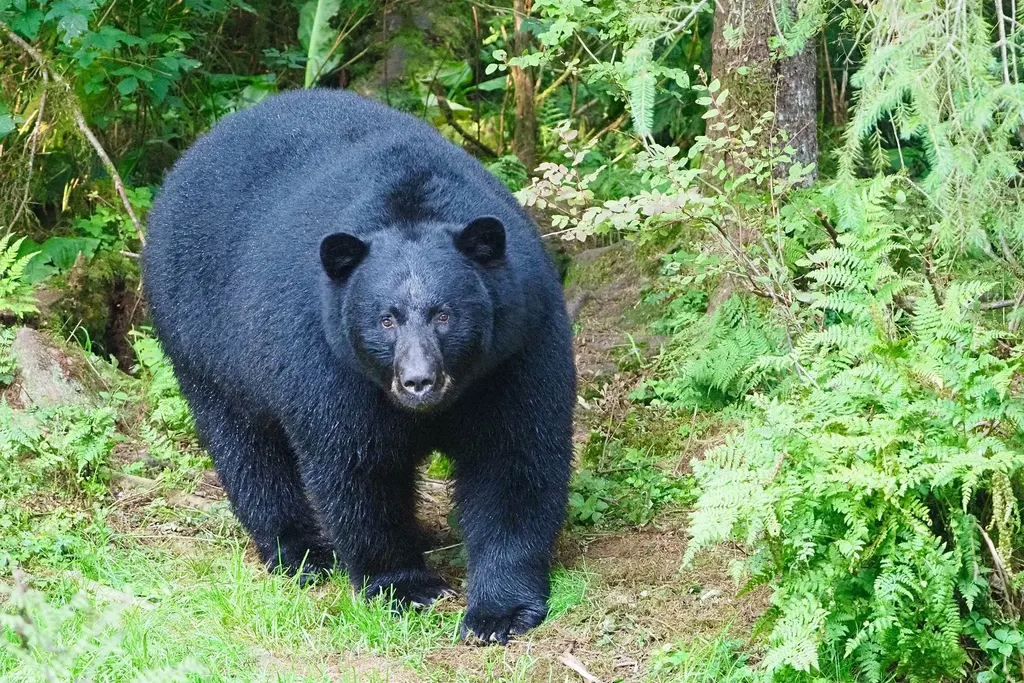
Living with bears in Durango comes down to one habit: never give a bear a reason to visit. Keep trash locked up until pickup morning, take bird feeders down from April 15 to November 15, and pick fruit before it drops. A bear that finds food near a house comes back, and bears that keep coming back often get killed.
This is not a theoretical problem in 2026. Drought cut natural food across much of Colorado, and bears moved into towns. Durango is one of the places feeling it most.
How bad is the bear problem in Durango right now?
Bad enough that the people who track it use the word "unprecedented." Bear Smart Durango's director used it in September 2026, telling Cowboy State Daily he gets multiple bear reports every morning.
The numbers back him up:
| Statewide, January through August | 2025 | 2026 |
|---|---|---|
| Bear sighting and incident reports | 3,680 | 8,672 |
| Bears euthanized | 83 | 294 |
| Bears trapped and relocated | 33 | 98 |
These are Colorado Parks and Wildlife figures as reported by Cowboy State Daily. For all of 2025, CPW logged 5,299 reports, 15 percent above its six-year average. Rep. Katie Stewart of Durango said La Plata County alone accounted for more than 12 percent of them.
La Plata County is a hotspot even in normal years. Bear Smart Durango's 2025 recap says the county, including the city, led every Colorado county in bear sighting and incident reports, bear-in-trash incidents, fruit and crop incidents, livestock incidents, orphaned cubs and bears euthanized.
Why is trash the problem?
Because it is the easiest calorie a bear will ever find. Colorado Parks and Wildlife (CPW) says most conflicts trace back to human food, garbage, pet food and bird seed. A bear can smell food from five miles away, according to CPW.
Fall makes it worse. Bears enter hyperphagia, a stretch of compulsive eating, and feed up to 22 hours a day to bank the 20,000 calories a day they need for hibernation. Most Colorado bears are active from mid-March through early November.
The cost of a bad habit shows up at the end of the line. A CPW spokesperson described one 2026 bear that had to be put down. Its upper intestines were blocked with plastic bags and wipes.
What are Durango's bear and trash rules?
Durango's ordinance has teeth. Under City Ordinance O-2018-6, you can't let wildlife drag your trash around. Cans and recycling bins have to be secured or stored. And if your home sits in one of the city's priority wildlife areas, you need a wildlife-resistant container, full stop.
Here is how the penalty ladder works, per the city:
1. Scattered trash that is not cleaned up within 24 hours counts as a violation. 2. First violation: the city delivers a wildlife-resistant container. You pay a one-time $100 delivery fee and $4.35 a month for four and a half years. 3. Next violation: a $100 fine. 4. After that: $200 each time.
Put the can out the morning of pickup, not the night before. The city also asks residents not to hang bird feeders from April 15 to November 15.
A 2011 to 2015 study by CPW and the city found that distributing wildlife-resistant containers cut conflicts by 50 percent. In 2018 the city began handing out automated bear-resistant containers in the highest-activity areas.
If you are new to town, our guide to setting up utilities in Durango covers the container sizes, monthly trash fees and pickup rules. Haulers outside city limits are listed under garbage collection services. Ask any of them how they handle bear-resistant containers before you sign up.
What does Colorado state law say?
The state tightened its law in 2026. Governor Polis signed House Bill 26-1342, which changes the "luring bears" statute in three ways:
- Officers now cite someone who knowingly creates conditions likely to attract bears. The old standard required proving the person did it intentionally.
- The first-offense warning requirement is gone, so a citation can come on the first visit.
- Fines for a third or subsequent offense rise to as much as $5,000, up from $2,000.
There's a carve-out for farming and for crops still growing outdoors before harvest. Beyond that, CPW is blunt: a trash can or bird feeder a bear can reach is a state-law violation, and some city and county ordinances pile on.
What do I do about bird feeders, fruit trees and chickens?
Feeders first. Take them down. Hummingbird, suet and seed feeders all count with CPW. Durango's April 15 to November 15 window is the city's own guidance. Nothing stops you from leaving them down all year.
Fruit trees come next. A fruit tree is a bear buffet that opens in late summer. Bear Smart Durango's 2025 recap quotes the area's wildlife manager, who said domestic fruit trees around towns produced good fruit in 2024 and drew bears closer to homes. If you do not want your harvest, The Good Food Collective runs community harvests. According to Bear Smart, 3,157 fruit trees were listed for harvest on its website in 2024, and half of its harvests targeted bear-prone trees.
Compost and grills need the same care. Clean the grill after every cookout. Keep compost in a sealed bin, or take scraps to Table to Farm Compost, whose four-acre facility Bear Smart Durango says is fully enclosed with electric fencing.
Chickens, bees and livestock need a fully covered enclosure, especially at night, per the city. Electric fencing helps. Bear Smart installed 17 electric fences for coops and hives in 2024.
Pumpkins count too. After Halloween, the city runs pumpkin recycling events. Bear Smart says residents have dropped off more than 24,000 pounds since 2019.
What should I do when I see a bear?
Meeting a bear on the trail feels like an emergency. Usually it isn't. Stand still, stay calm and wait. CPW wants the bear to have an open path to leave. Never run, and never climb a tree.
A bear near the house is a different story. Make noise from a safe distance: yell, blow a whistle, clap, rattle a can of coins. Never walk toward it.
Some signs mean you are too close:
- Huffing
- A popping jaw
- A stomped paw
- Any change in the bear's behavior because of you
What if it keeps coming? Hold your ground and yell. Bear spray comes out at about 40 feet. And if the worst happens, don't play dead. Fight back with anything you've got. CPW notes that people have driven bears off with trekking poles, pen knives and bare hands.
A mother with cubs is the exception to calm hazing. CPW says mothers rarely attack, but you should never get between a mother and her cubs.
Report a bear that gets into a house, kills livestock or threatens anyone. On weekdays from 8 a.m. to 5 p.m., that call goes to CPW. Outside those hours, CPW points you to the State Patrol or the sheriff.
How do bears fit with hiking and pets?
Trails are bear country too. Carry bear spray, a whistle and something that rattles. A dog that runs off after a bear can bring it straight back to you, so keep yours close. Our pet owner's guide covers life with dogs in an outdoor town.
For route ideas and where to go once you are out there, see the outdoor adventure guide. Heading into the backcountry in fall? Remember bears are working 22-hour days. Store food in a locked vehicle or a bear locker, and cook well away from your tent.
What if I rent, or run a business?
Renters share the same legal exposure as owners, since the city's rule applies to any "property owner or occupant." Ask your landlord who supplies the trash container, and ask for a bear-resistant one if yours has no latch.
Businesses are responsible for securing their own containers, according to the city. Additional pickups may be needed during bear season. Downtown commercial customers in the city's Phase 1 corridor have had auto-locks fitted on front-load containers since 2019.
Last, talk to your neighbors. One open can on the block undoes everyone else's work.