
The best wildfire preparation for a Durango home is a clear 5 feet around the walls, thinner fuel out to 30 feet, and a phone signed up for LPC Alerts. Do those three things first. Then work outward to 100 feet, pack a go bag, and learn who announces fire restrictions.
Everything below comes from official or primary sources: the Colorado State Forest Service, La Plata County and the City of Durango. This is safety information, not insurance or financial advice.
Why does Durango take wildfire so seriously?
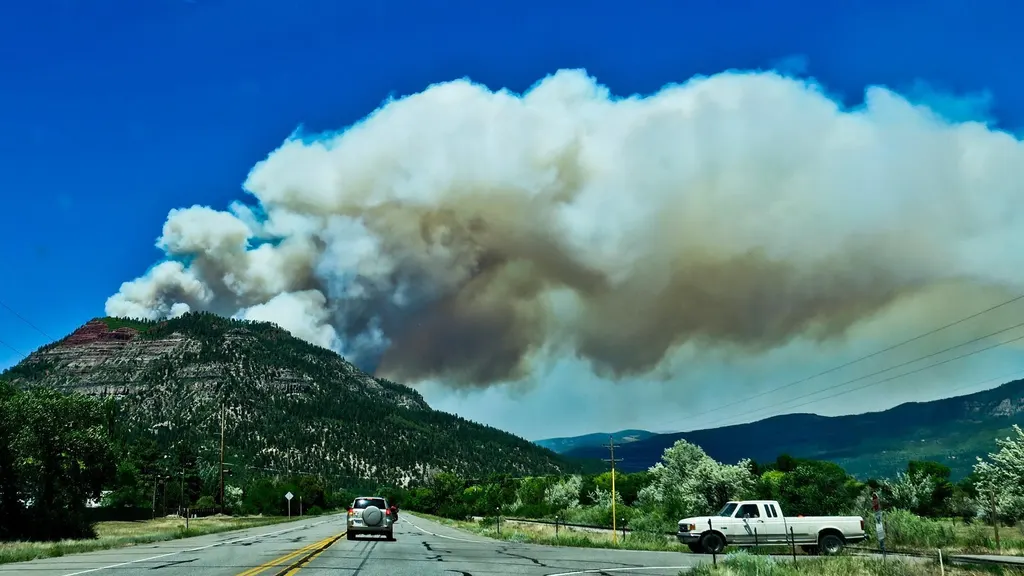
Durango doesn't need a lecture on wildfire. It lived one. The 416 Fire started on June 1, 2018, about 10 miles north of town, hard against the narrow-gauge tracks. The Colorado Encyclopedia traces it to embers from a coal-fueled passenger train. Crews didn't fully contain it until July 31, after more than 54,000 acres of the San Juan National Forest had burned.
The fire reshaped the town's habits:
- The San Juan National Forest enacted its first-ever forest closure, and La Plata County closed public lands around Durango, according to the Mountain Studies Institute.
- More than 2,000 people were evacuated across the 416 and nearby Burro fires, per the same source.
- Thousands more people dealt with hazardous smoke, the same source says.
That is why the questions below are not abstract here.
What is defensible space, and how big is it?
Defensible space is the buffer you clear around your house so a fire has less to chew on. The Colorado State Forest Service breaks it into three zones. Closer to the walls, tighter rules.
| Zone | Distance from home | Main job |
|---|---|---|
| Zone 1 | 0 to 5 feet | Stop flames touching the structure |
| Zone 2 | 5 to 30 feet | Cut a fire's intensity and spread |
| Zone 3 | 30 to 100 feet | Keep fire on the ground, out of the tree crowns |
Zone 1 (0 to 5 feet)
- Use rock, gravel, pavers or bare earth. No mulch, no shrubs, no woody debris.
- Keep firewood out of this zone.
- Rake needles and leaves within 5 feet of the house and decks.
- Clear roofs, gutters and decks often, and prune branches hanging over the roof.
- Clear all fuels within 10 feet of the chimney.
Zone 2 (5 to 30 feet)
- Mow grass to 4 inches or less.
- Leave at least 10 feet between tree crowns.
- Prune branches up to 6 to 10 feet off the ground, or a third of the tree's height, whichever is less.
- Pull out the "ladder fuels" under trees, the low growth that carries a ground fire up into the branches.
Zone 3 (30 to 100 feet)
- Skip the mowing.
- Think spacing. If fuels are widely separated and low branches are gone, a fire has to drop to the ground to keep moving.
Two details trip up Durango homeowners. First, Gambel oak. It resprouts hard, so the forest service says to treat or mow it every 3 to 5 years. Second, propane. Keep aboveground tanks at least 30 feet from the house and clear flammable plants within 10 feet of tanks and gas meters. Firewood belongs at least 30 feet away, stacked uphill or level with the house. The full home ignition zone checklist covers vents, roofs and fences.
Don't stop at the yard. The state forest service's top structural priorities include a Class A fire-rated roof, 1/8-inch metal mesh over vents, and tempered glass in windows.
How do I get help doing the work?
You don't have to start alone. Wildfire Adapted Partnership is a nonprofit based here that serves La Plata and four nearby counties. Its site lists free wildfire site risk visits and mitigation incentive programs. It also helps neighborhoods earn national Firewise USA recognition.
When you need hands and chainsaws, these local listings do mitigation or tree work. Ratings are Google ratings in each listing as of October 2026. They are not our vetting.
- Cedar Enterprises lists wildfire mitigation and landscaping. 5.0 stars across 66 reviews.
- Wildfire Defense describes wildfire mitigation work around La Plata County. 5.0 stars across 12 reviews.
- Tangled Oak Fire Mitigation offers consultations, brush removal and forestry mulching. 5.0 stars across 3 reviews, so check references.
- Durango Tree Care and Momentum Tree Experts have the deepest tree-service review counts, at 165 and 154 reviews, both 5.0.
Browse more under tree services and landscapers. Ask what slash disposal costs and where the debris goes. Slash piles near a house are fuel, so the Colorado State Forest Service wants accumulations isolated 30 feet or more from the home.
How do I sign up for emergency alerts?
Register for LPC Alerts. It's the county's emergency notification system, and it replaced the older CodeRED service. La Plata County says it sends location-based notices by phone call, text and email about wildfires, floods and hazardous weather.
One catch matters. If you were signed up for the old system, the county says you must sign up again for the new one. Check your registration now, and do it again after any move.
Alerts sort by location, so the address you enter decides what you receive. Register your home, and consider your workplace too.
What goes in a go bag?
La Plata County publishes an evacuation checklist. Highlights:
- ID and proof of address for re-entry
- Important documents, medications and prescription numbers
- Keys, cash and cards
- Phone chargers and battery packs
- Clothing for 3 to 5 days
- Non-perishable food and water for 72 hours
- Computer backups, and a video inventory of your home made before an emergency
Plan two ways out of your neighborhood, and pick a meeting place and an out-of-area contact. Got pets? Label them with ID, keep vet records and medications in one spot, and crate dogs and small pets one animal per carrier. Horse owners should practice loading the trailer before they need to.
Who announces fire restrictions?
It depends on who owns the land. That is the part that surprises people.
- Unincorporated La Plata County: the county sheriff enacts restrictions, at the request of the area's fire chiefs. In 2026 the county moved from Stage II to Stage I on July 24, per its announcement. Those rules exclude private land inside Durango, Bayfield and Ignacio, and federal or tribal land.
- Inside the City of Durango: the city's fire restrictions are always in place. Recreational fires and open burning are prohibited, and fireworks are banned under the city code.
- National forest: the forest service sets its own rules. They can differ from the county's.
Check La Plata County's fire restrictions page before a campfire, a chainsaw job or a burn pile. When we checked on October 16, 2026, the county reported no fire restrictions. That can change fast in a dry year.
The city also bans smoking on the Animas River Trail and on city trails and open space. Out in unincorporated La Plata County, floating sky lanterns are banned all year under Ordinance 2021-03.
What if I live near the forest or rent?
Renters can still do their share. Clear the gutters, move firewood and propane, rake the first 5 feet, and sign up for alerts. For larger work, ask your landlord, since changes to trees and structures need the owner's say.
If your property is in the wildland-urban interface, our home services guide covers what to ask a contractor about defensible space. The seasonal maintenance guide fits yard work into the calendar. And if you are weighing a move, the moving to Durango guide covers neighborhoods and the services to line up first.
Last, put a date on your calendar. Defensible space is not a one-time job. Trees, grass and shrubs grow back every year, and the Colorado State Forest Service says the zone needs regular, ongoing maintenance.